
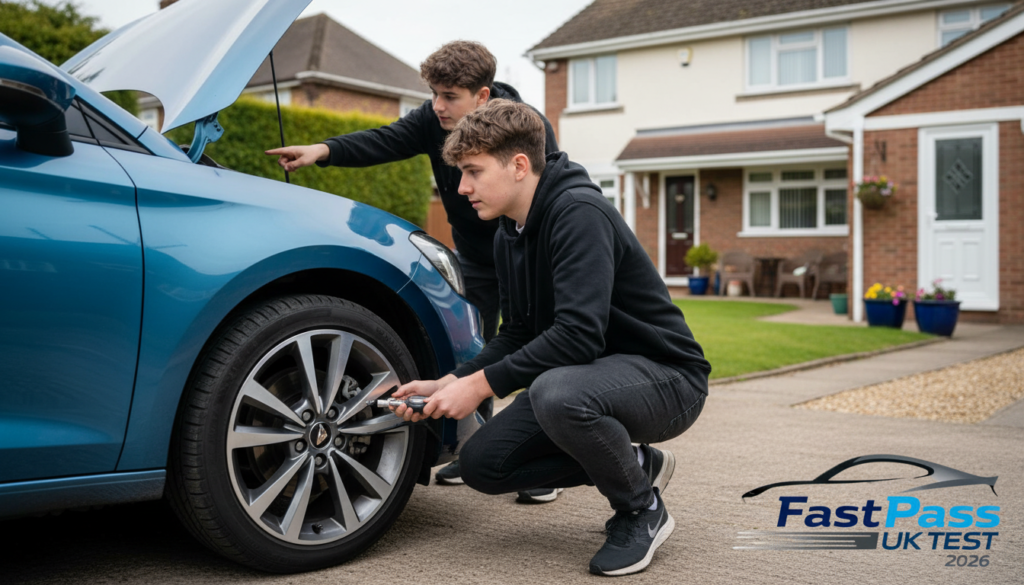
Safety & Your Vehicle Theory Test 2026 – Essential Checks to Pass Easily
Understanding safety & your vehicle theory test 2026 is a crucial part of passing your UK driving theory test. The DVSA requires all drivers to know how to check, maintain, and ensure their vehicle is safe before driving. These rules are based on the Highway Code and DVSA safety standards, which aim to reduce accidents caused by poor vehicle condition.
Vehicle safety is not just about passing the test — it’s about protecting yourself, your passengers, and other road users.
1. Why Vehicle Safety Is Important
The safety & your vehicle theory test 2026 focuses on ensuring drivers understand how vehicle condition affects road safety.
Poor vehicle maintenance can lead to:
- Brake failure
- Tire blowouts
- Reduced visibility
- Engine breakdowns
Regular checks help prevent accidents and ensure your car meets legal UK road safety standards.
2. Daily Vehicle Safety Checks (DVSA Guidelines)
Before driving, you should carry out simple safety checks. These are frequently tested in vehicle safety checks UK theory test questions.
✔ Tyres
- Minimum tread depth: 1.6mm (legal requirement in UK)
- Check for cuts, bulges, or damage
- Ensure correct air pressure
✔ Lights
- Check headlights, brake lights, and indicators
- Make sure all lights are clean and working
✔ Mirrors & Windows
- Clean and clear for proper visibility
- No cracks blocking your view
✔ Number Plates
- Must be visible and clean
These checks are quick but critical for safe driving.
3. Weekly & Regular Maintenance Checks
The DVSA vehicle maintenance rules 2026 recommend regular inspections beyond daily checks.
✔ Engine Oil
Low oil can damage your engine. Always maintain proper levels.
✔ Coolant
Prevents overheating, especially during long drives.
✔ Brake Fluid
Essential for proper braking performance.
✔ Windscreen Washer Fluid
Ensure clear visibility in all weather conditions.
Ignoring these checks can lead to serious mechanical failures.
4. Legal Requirements for Vehicle Safety in the UK
In the UK theory test vehicle safety, you must understand legal obligations.
Key rules include:
- Vehicles must be roadworthy at all times
- Tyres must meet legal standards
- Lights must be functional
- Seatbelts must be worn by all passengers
Driving an unsafe vehicle can result in fines, penalty points, or even a driving ban.
5. Warning Lights and Dashboard Signals
Modern vehicles use dashboard warning lights to indicate problems.
Common warning lights include:
- Engine warning light
- Brake system warning
- Oil pressure warning
- Battery alert
If any critical warning light appears, you should stop driving safely and investigate the issue.
Understanding these signals is part of driving vehicle safety guidelines UK.
6. Common Mistakes Learners Make
Many learners fail this section due to simple mistakes:
- Ignoring tyre condition
- Not understanding dashboard warnings
- Skipping regular maintenance
- Driving with poor visibility (dirty mirrors/windows)
Avoiding these mistakes will help you pass the safety & your vehicle theory test 2026 easily.
7. DVSA-Based Tips to Pass
Follow these proven tips:
✔ Learn Basic Car Maintenance
Understand how your vehicle works.
✔ Check Your Car Regularly
Daily and weekly checks are essential.
✔ Practice Theory Questions
Practice UK theory test questions here
Learn hazard perception tests here
✔ Understand Legal Rules
Focus on Highway Code vehicle safety sections.
8. External Resources (IMPORTANT)
Official DVSA vehicle safety and maintenance rules
Highway Code vehicle safety guidelines
9. Why This Topic Matters in 2026
With modern vehicles, including electric cars and advanced safety systems, drivers must be more aware than ever.
The safety & your vehicle theory test 2026 ensures drivers:
- Understand modern vehicle systems
- Maintain safe driving conditions
- Reduce breakdown and accident risks
10. Final Thoughts
The safety & your vehicle theory test 2026 is not just about answering questions — it’s about becoming a responsible driver. By regularly checking your vehicle and understanding safety rules, you can prevent accidents and drive confidently.
Consistent practice and understanding of DVSA guidelines will help you pass your theory test on your first attempt.