
Motorway Rules UK Theory Test 2026 – Complete Smart Motorways Guide to Pass Easily
Understanding motorway rules UK theory test 2026 is essential for passing your UK driving theory test. Motorways are the fastest and busiest roads in the UK, and they require strict adherence to rules to ensure safety.
In 2026, special attention is given to smart motorways, which use technology to manage traffic flow and reduce congestion. The DVSA includes these rules in the theory test to prepare drivers for modern road conditions.
1. What Are Motorways?
Motorways are high-speed roads designed for long-distance travel. They are marked with blue signs and have multiple lanes.
In the motorway rules UK theory test 2026, you will be tested on:
- Lane discipline
- Speed limits
- Smart motorway systems
- Safe driving practices
Motorways allow faster travel but require higher awareness and responsibility.
2. Motorway Speed Limits (2026 Rules)
Understanding motorway speed limits UK 2026 is crucial.
- Cars and motorcycles: 70 mph
- Vehicles towing trailers: 60 mph
- Heavy vehicles: Lower limits apply
Always adjust your speed based on:
- Traffic conditions
- Weather
- Road works
Speed limits may also be displayed on electronic signs on smart motorways.
3. Lane Discipline Rules
Lane discipline is one of the most tested topics in UK motorway driving rules theory test.
✔ Left Lane (Lane 1)
- Default driving lane
- Use when road is clear
✔ Middle Lane (Lane 2)
- Overtaking slower vehicles
✔ Right Lane (Lane 3 or more)
- For overtaking only
- Do not stay unnecessarily (middle lane hogging is illegal)
Always return to the left lane after overtaking.
4. What Are Smart Motorways?
Smart motorways are a major focus in smart motorways UK rules 2026.
They use technology such as:
- Variable speed limits
- Lane control signals
- Hard shoulder running
Types of Smart Motorways:
✔ Controlled Motorways
- Variable speed limits
- Hard shoulder used only in emergencies
✔ Dynamic Hard Shoulder
- Hard shoulder used as a lane during busy times
✔ All-Lane Running Motorways
- No permanent hard shoulder
- Emergency refuge areas provided
Understanding these systems is essential for passing your theory test.
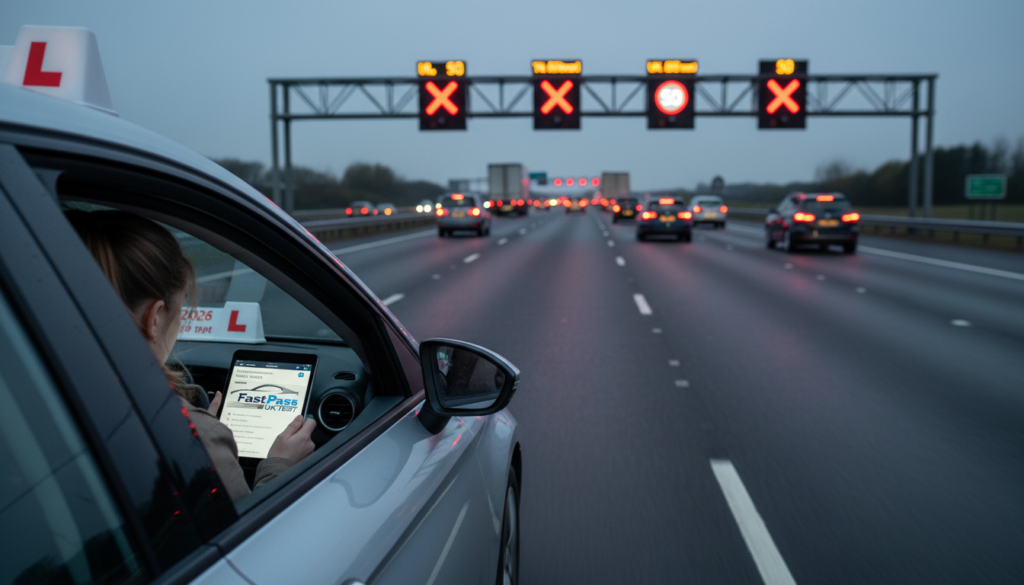
5. Lane Signals and Overhead Signs
On smart motorways, overhead signs give important instructions.
✔ Red “X” Sign
- Lane closed → Do NOT use
✔ Speed Limit Signs
- Mandatory speed limits displayed electronically
✔ Arrow Signs
- Indicate lane changes
Ignoring these signs can result in fines and penalty points.
6. Safe Driving on Motorways
To follow driving on motorway UK tips, always:
- Keep a safe distance (2-second rule, 4 seconds in wet conditions)
- Check mirrors before changing lanes
- Use indicators properly
- Stay alert and avoid distractions
Motorway driving requires full concentration at all times.
7. Joining and Leaving Motorways
✔ Joining
- Use slip road to build speed
- Match speed with traffic
- Merge safely
✔ Leaving
- Move into left lane in advance
- Follow exit signs
- Reduce speed gradually
These steps are commonly tested in the UK theory test motorway rules.
8. Breakdown and Emergency Rules
If your vehicle breaks down:
- Move to the hard shoulder (if available)
- Turn on hazard lights
- Exit the vehicle safely
- Call for assistance
On smart motorways, use emergency refuge areas if there is no hard shoulder.
9. Common Mistakes Learners Make
Avoid these common errors:
- Staying in the middle lane unnecessarily
- Ignoring smart motorway signals
- Not maintaining safe distance
- Speeding during variable limits
These mistakes can lead to test failure.
10. DVSA-Based Tips to Pass
✔ Learn Smart Motorways Thoroughly
This is a high-priority topic in 2026.
✔ Practice Mock Tests
Practice UK theory test questions here
Try hazard perception clips here
✔ Understand Rules, Not Just Memorize
Focus on real-life application.
11. External Resources (IMPORTANT)
Official Highway Code motorway rules UK
DVSA smart motorway guidance
12. Final Thoughts
The motorway rules UK theory test 2026 is a crucial part of becoming a safe driver. With the introduction of smart motorways, drivers must be more aware of lane control systems and electronic signals.
By understanding motorway rules, practicing regularly, and staying updated with DVSA guidelines, you can confidently pass your theory test on your first attempt.