
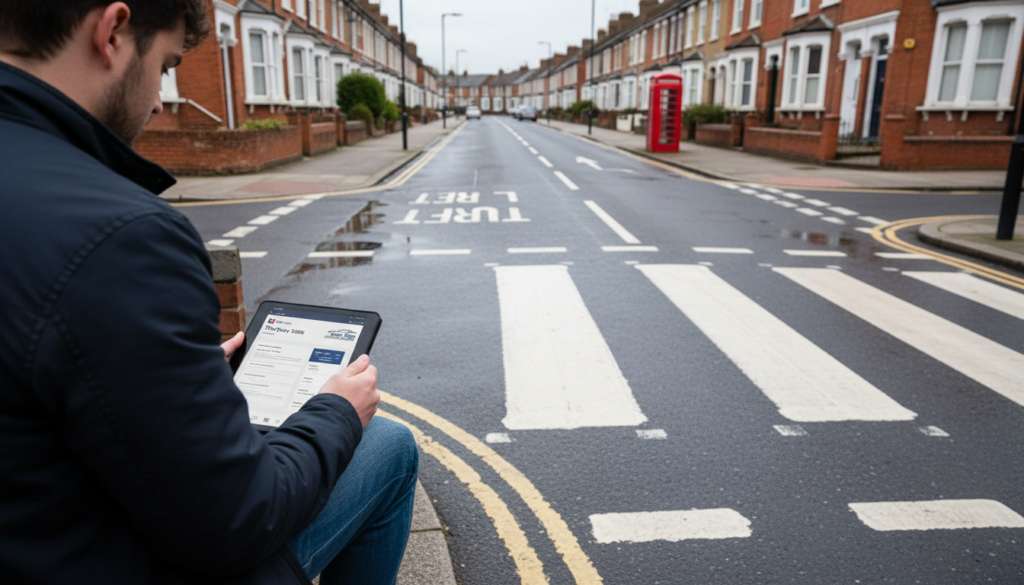
Road Markings UK Theory Test 2026 – Complete Guide to Pass Easily
Understanding road markings UK theory test 2026 is essential for passing your UK driving theory test. Road markings provide critical information to drivers, helping maintain safety, control traffic flow, and reduce accidents.
In 2026, the DVSA continues to emphasize the importance of road markings as part of modern driving rules. These markings are based on the Highway Code and must be understood clearly by all drivers.
1. What Are Road Markings?
Road markings are painted lines, symbols, and words on the road that guide drivers and provide instructions.
In the road markings UK theory test 2026, you will be tested on:
- Identifying different types of markings
- Understanding their meanings
- Knowing how to respond correctly
They are just as important as road signs and signals.
2. Types of White Road Markings
White lines are the most common and are heavily tested in white lines road rules UK.
✔ Broken White Lines
- Separate lanes of traffic
- You may cross them when safe
✔ Solid White Lines
- Do not cross unless necessary (e.g., turning into a side road)
✔ Double White Lines
- If the line nearest you is solid → DO NOT CROSS
- If the line nearest you is broken → You may cross if safe
✔ Lane Arrows
- Show direction of traffic flow
- Must follow the arrow direction
Understanding these is essential for UK road markings meanings.
3. Yellow Road Markings Explained
Yellow lines control parking and stopping rules.
✔ Single Yellow Line
- Parking is restricted at certain times
- Check nearby signs for details
✔ Double Yellow Lines
- No parking at any time
- You may stop briefly to drop off passengers
✔ Yellow Box Junctions
- Do not enter unless your exit is clear
- Helps reduce congestion
These are frequently asked in yellow road markings UK meaning questions.
4. Special Road Markings You Must Know
The DVSA road markings guide 2026 includes several important markings:
✔ Zig-Zag Lines
- Found near pedestrian crossings
- No parking or overtaking allowed
✔ Bus Lane Markings
- Reserved for buses (and sometimes taxis/cycles)
- Active during specific hours
✔ Cycle Lane Markings
- Reserved for cyclists
- Avoid driving or parking in these lanes
✔ Stop Lines
- Must stop completely at traffic signals or signs
These markings are essential for safe driving and are commonly tested.
5. Road Markings in Modern Driving (2026 Updates)
In 2026, road markings have evolved to support:
- Smart motorways
- Cycle-friendly roads
- Low-emission zones
- Urban traffic control
The road markings UK theory test 2026 reflects these updates to ensure drivers are prepared for modern road systems.
6. Common Mistakes Learners Make
Many learners lose marks due to simple errors:
- Confusing single and double white lines
- Ignoring yellow box junction rules
- Not understanding zig-zag restrictions
- Misinterpreting lane arrows
Avoiding these mistakes is key to passing your theory test.
7. How to Learn Road Markings Easily
Follow these proven tips:
✔ Learn by Categories
Separate white, yellow, and special markings.
✔ Use Visual Practice
Images help you remember markings faster.
✔ Practice Mock Tests
Practice UK theory test questions here
Learn hazard perception clips here
✔ Revise Regularly
Consistency is the key to success.
8. External Resources (IMPORTANT)
Official Highway Code road markings guide
DVSA theory test preparation materials
9. Why Road Markings Matter
Road markings are critical because they:
- Improve traffic flow
- Prevent accidents
- Provide clear driving instructions
- Support road safety laws
Understanding them is essential for both passing the test and real-world driving.
10. Final Thoughts
The road markings UK theory test 2026 is a fundamental part of your driving knowledge. By learning different types of markings, understanding their meanings, and practicing regularly, you can pass your theory test confidently.
Focus on understanding, not memorizing — and success will follow.