
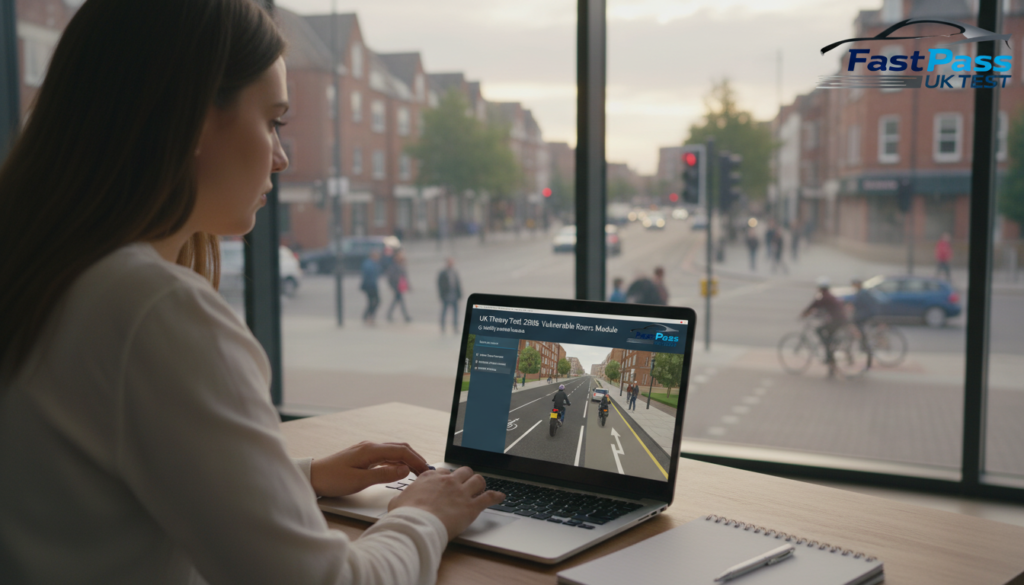
Vulnerable Road Users Theory Test 2026 – Essential Rules to Pass Easily
Understanding vulnerable road users theory test 2026 is crucial for passing your UK driving theory test and becoming a safe, responsible driver. The DVSA places strong emphasis on this topic because vulnerable road users are at higher risk of serious injury in accidents.
Vulnerable road users include pedestrians, cyclists, motorcyclists, horse riders, and road workers. As a driver, you must understand how to interact safely with them in different road situations.
1. Who Are Vulnerable Road Users?
In the vulnerable road users UK theory test, you will be expected to identify and understand different types of road users who are more exposed to danger.
These include:
- Pedestrians (especially children, elderly, and disabled people)
- Cyclists
- Motorcyclists and scooter riders
- Horse riders
- Road workers
These groups are considered vulnerable because they lack the protection that vehicles provide.
2. Why Vulnerable Road Users Are Important in 2026
The vulnerable road users theory test 2026 reflects modern driving conditions, including increased cycling, e-scooters, and urban traffic.
The DVSA has updated guidelines to ensure drivers:
- Give more space when overtaking
- Reduce speed in urban and residential areas
- Stay alert for unpredictable movements
Understanding these updates is essential for both the theory test and real-world driving.
3. Key Rules for Pedestrian Safety
Pedestrians are the most common vulnerable road users.
You should:
- Always stop at zebra crossings when someone is waiting
- Give way at junctions when pedestrians are crossing
- Watch for children who may run into the road
- Be extra careful near schools and busy areas
In the UK driving theory test safety rules, failing to prioritize pedestrians is a common mistake.
4. Cyclists and Safe Overtaking
Cyclists are particularly vulnerable due to their exposure and balance requirements.
According to DVSA road users rules 2026:
- Leave at least 1.5 meters when overtaking cyclists
- Slow down before passing
- Watch for cyclists turning without signaling
- Be aware of cycle lanes and advanced stop lines
Cyclists may also avoid potholes or obstacles, so always anticipate sudden movements.
5. Motorcyclists and Scooter Riders
Motorcyclists can be harder to see and may travel faster than expected.
Key safety tips:
- Check mirrors carefully before changing lanes
- Give extra space in traffic
- Be cautious at junctions
- Avoid sudden movements
The vulnerable road users theory test 2026 often includes questions about visibility and awareness of motorcyclists.
6. Horse Riders and Rural Roads
Horse riders require special attention.
You should:
- Slow down significantly
- Pass wide and slowly
- Avoid loud noises (horns, revving engine)
- Stop if the rider signals
This is a frequently tested topic in sharing the road safely UK questions.
7. Road Workers and Temporary Hazards
Road workers are also considered vulnerable.
Always:
- Follow temporary traffic signals
- Reduce speed in work zones
- Stay alert for unexpected hazards
Ignoring road workers can lead to serious penalties and accidents.
8. Common Mistakes to Avoid
Many learners fail due to simple errors:
- Not giving enough space to cyclists
- Ignoring pedestrian priority
- Driving too fast in residential areas
- Failing to check mirrors properly
Avoiding these mistakes is key to passing the vulnerable road users theory test 2026.
9. DVSA-Based Tips to Pass
Follow these proven strategies:
✔ Stay Alert at All Times
Always scan the road for potential hazards.
✔ Reduce Speed in Risk Areas
Slow down near schools, crossings, and urban roads.
✔ Give Space and Time
Never rush when dealing with vulnerable users.
✔ Practice Mock Tests
Practice UK theory test questions here
Learn hazard perception clips here
10. External Resources (IMPORTANT)
Official Highway Code rules for vulnerable road users
DVSA safe driving guidelines UK
11. Final Thoughts
The vulnerable road users theory test 2026 is not just about passing your exam — it’s about protecting lives. By understanding how to interact safely with pedestrians, cyclists, and other vulnerable groups, you become a responsible and confident driver.
Consistent practice and awareness will help you pass your theory test on your first attempt.